


If you're breaking up with your pet's food, don't quit them cold turkey.
Switching foods due to age, allergies, pet size, or simply because you want better a food for you pet is the right thing to do. But, if the transition is not done properly, your pet might experience GI upset (gas, regurgitation, vomiting, or diarrhea).
Think of us as your pet food relationship experts! Use our 7-Day Method to ensure a successful, stress-free transition — and skip any breakup blues.
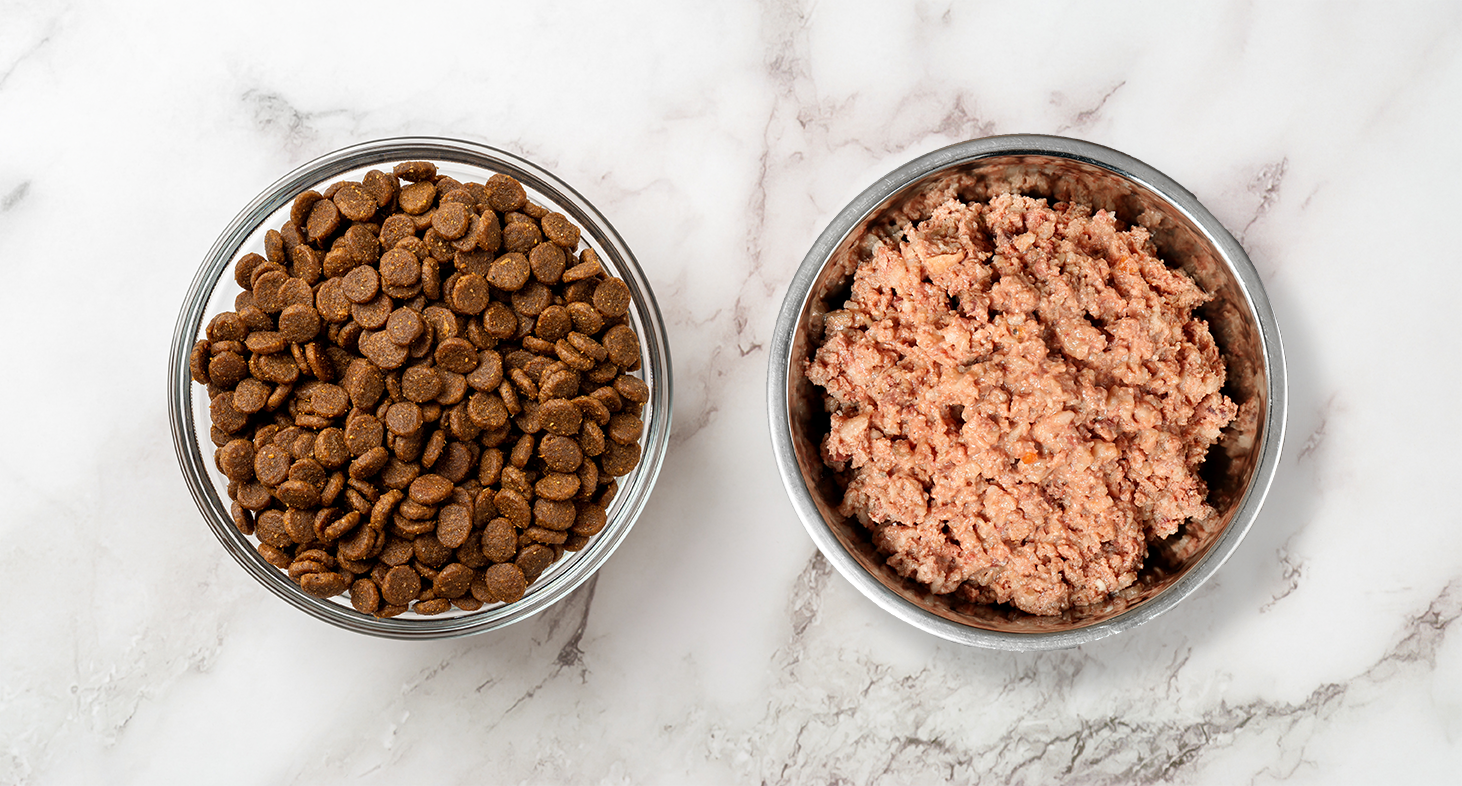
First & Foremost: Know the 3 T's
Before opening that new bag, check whether the new food differs from the old one in any of these three ways. If it does, plan to add 5–7 extra days to your transition schedule so your pet's gut has time to fully adjust.
Taste
A new protein or flavor can catch even eager eaters off guard.
Texture
Switching from kibble to raw or wet food is a big shift — for the belly too.
Temperature
Raw and fresh foods are served differently than shelf-stable kibble.
This is especially important for cats. Because, cats are imprint eaters. This means that kittens learn what "food" is at an early age, usually from their mom.
Cats are such strong imprint eaters that they could starve themselves before eating something they don't recognize as food. It's important to introduce a wide variety of foods to a kitten so that they aren't boxed in with limited options at an older age when health needs may require a diet change.
For example: Cats who love fish and seafood may find chicken, turkey, and duck unimpressive.
⏱️ Heads up: If the new food differs in any of the 3 T's, add 5–7 more days to your schedule before starting.
The 25% Rule — This Isn't Speed Dating
A proper transition allows a pet's digestive system to handle large changes in ingredients or nutrients over several days.
We recommend you introduce new food in gradual 25% increments rather than switching all at once. This means you'll need to have plenty of both old and new food on hand before you start. Don't get caught short mid-transition!
After all, wouldn't your tummy hurt if you were eating nothing but oatmeal everyday for months and then suddenly ate a porterhouse steak?!
⚠️ Watch for warning signs. If you notice gas, loose stool, or intermittent vomiting, pause at your current stage and wait until things settle before moving forward.
The 7-Day Transition Schedule
Move through each stage every two days — but only when your pet's tummy gives the green light. Every pet is different, so let their digestion lead the way.
Days 1 & 2 — 25% New Food
Swap out just a quarter of the bowl with new food. Keep it gentle and watch how they respond.
Days 3 & 4 — 50% New Food
Things going well? Step it up to a half-and-half split. Keep monitoring.
Days 5 & 6 — 75% New Food
Almost there! The new food takes center stage with just a small amount of old food left.
Day 7 — 100% New Food 🎉
You made it! The transition is complete and your pet's gut is ready for their new diet.

FAQs
Can I feed raw food and kibble at the same time?
Yes! Mixing raw and dry food is perfectly safe for dogs and cats. Just be sure to wash their bowl promptly and thoroughly after every meal.
Do the feeding stages change depending on the formula?
Not really — but every pet is different. Only move to the next stage once your pet's tummy has settled at the current ratio.
Will the portion sizes match my old food?
Probably not! Different formulas have different caloric densities, so always check the serving guide on the new bag to avoid overfeeding.
What if I run out of old food before 7 days are up?
Your pet will likely be just fine! Adding a digestive aid like goat's milk or pumpkin can help ease a faster transition.
Looking for more Pet Parenting tips?
Tomlinson's is your go-to pet supply store for natural, healthy pet products in Austin and the Central Texas region. Come shop in-store and we will help you create the perfect diet specifically for your dog or cat! Visit our shop full of products sold through team members trained in animal nutrition.
Featured Products

Description Suggested Feeding and Cost Analysis Ingredients GTD Analysis Note: Frozen foods, bones, and supplements are eligible for store pick...
View full details
Description Suggested Feeding and Cost Analysis Ingredients Guaranteed Analysis Keep mealtime simple, delicious, and tail-...
View full details
Description Suggested Feeding and Cost Analysis Ingredients GTD Analysis Note: Frozen foods, bones, and supplements are eligible for store p...
View full details
Description Suggested Feeding and Cost Analysis Ingredients Guaranteed Analysis Zignature's Limited Ingredient Sal...
View full details

